
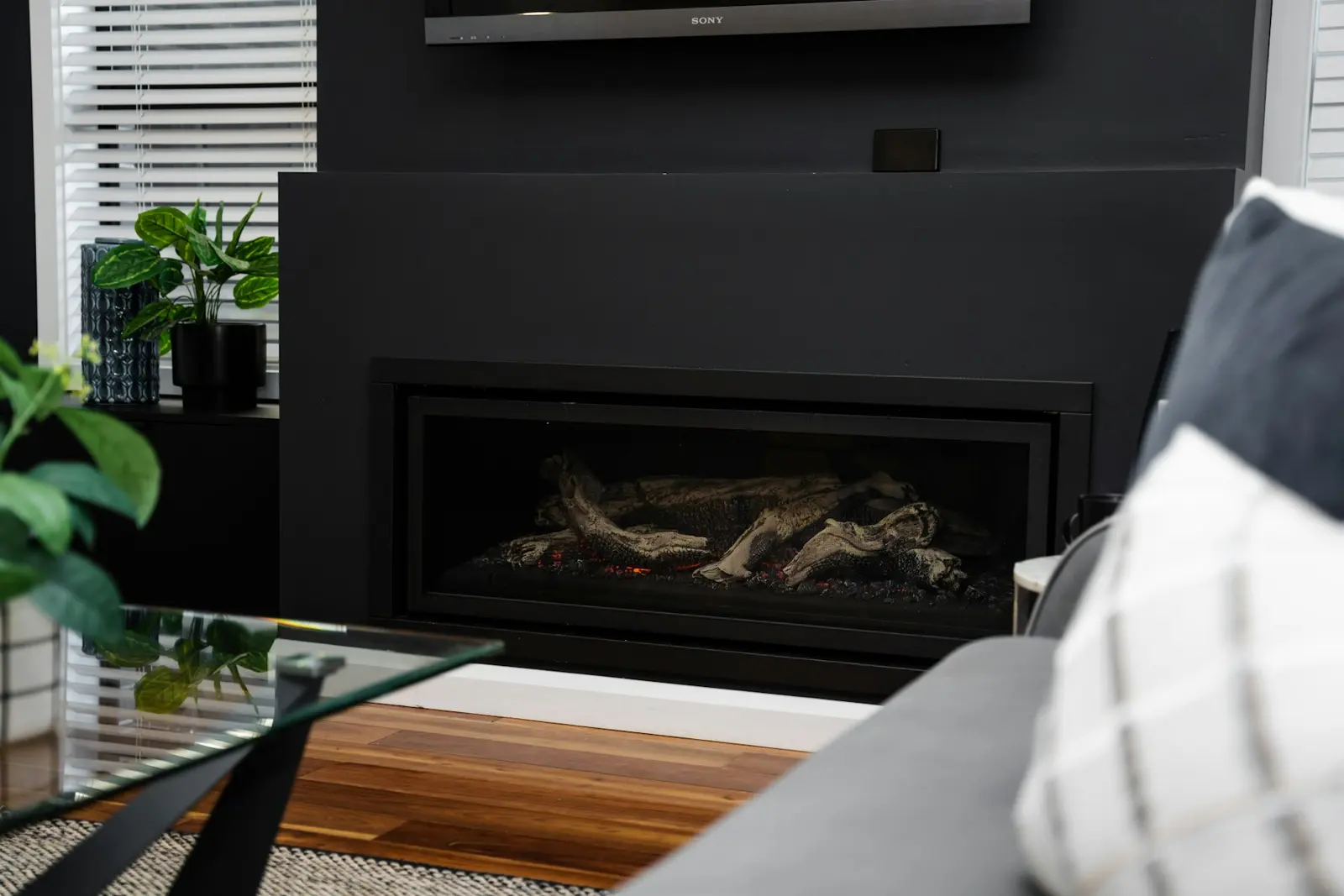
How do you convert a wood fireplace to gas or propane?
A conversion runs in five steps: a free inspection, a chimney sweep, choosing the unit and the fuel, running a gas line to the firebox, then installation with a burn test and carbon monoxide check. If no natural gas line reaches your home, propane from a tank on your lot does the same job once the fireplace is set up for it; the tank comes from a propane supplier. In Scottsdale, converting to gas logs usually runs $2,500 to $4,500 and to a sealed insert $4,500 to $9,500.
Scottsdale Chimney · November 11, 2026
The conversion, step by step
Most of the work happens before anything is lit.
- Free inspection: we check the firebox, damper, flue and chimney top, and whether the fireplace is masonry or factory-built. Some factory-built wood fireplaces are not approved for gas logs.
- Chimney sweep: creosote, ash and old nests are cleaned out before any gas appliance goes in.
- Unit and fuel: gas logs, an insert or a new fireplace, on natural gas or propane. Each appliance is set up for one fuel.
- Gas line: run from the nearest gas pipe, or the propane tank, to a shut-off valve at the fireplace. The City of Scottsdale lists gas system work under its plumbing permit; other towns set their own rules, and we check what your city requires.
- Venting: vented logs need the damper fixed open; an insert usually needs a liner up the chimney.
- Install and test: new gas joints leak-tested, then a burn test, a carbon monoxide check and a walkthrough of the controls.
Gas logs, a gas insert or a new gas fireplace
Gas logs sit in the open firebox and look the most like a wood fire, but with the damper open much of the heat goes up the chimney. A vented log set alone runs $600 to $1,800 installed.
A gas insert is a sealed, glass-front box that slides into the old fireplace and heats the room, which you notice on cold desert nights in December and January. A new gas fireplace makes sense when the old firebox is cracked, the wrong size or in the wrong spot, or the whole wall is being remodeled; it is quoted after measuring.
Venting: vented, direct vent and vent-free
Vented gas logs exhaust up the existing chimney, so the damper stays clamped open. A direct-vent insert or fireplace is sealed behind glass, takes its air from outside and sends all exhaust back out. Vent-free units have no flue and release their exhaust, including water vapor, into the house. We recommend vented logs or direct vent for living spaces; if you are considering vent-free, check your city and HOA rules first.
No natural gas line? How the propane option works
Most homes in Scottsdale and Paradise Valley are served by Southwest Gas; some homes toward Cave Creek, Carefree and Rio Verde run on propane. Without a gas main on your street, you can ask Southwest Gas about bringing service in (its residential application says installation normally follows 8 to 12 weeks after contract and payment, longer if a main has to be designed) or put in a propane tank.
The tank is the propane supplier's job: they size, set and fill it, and you should ask whether their quote includes the line to the house. We handle the fireplace side. What to sort out with the supplier:
- Size: residential tanks come in sizes such as 250, 500 and 1,000 gallons. The Propane Education & Research Council lists a 500-gallon tank at about 10 feet long. Size it to everything the tank will serve, not just the fireplace.
- Fill: tanks are filled to about 80 percent, leaving room for propane to expand as it warms, as Ferrellgas explains.
- Above ground or buried: a buried tank shows only a lid but costs more because of the digging, and anyone digging must contact Arizona 811 first.
- Lease or own: a leased tank belongs to the supplier, who usually maintains it, and only that company can refill it. An owned tank can be filled by any supplier, but the upkeep is yours.
- Setbacks: under NFPA 58, the national propane code, an above-ground tank of 125 to 500 gallons sits at least 10 feet from the house and the property line, as does a buried tank up to 2,000 gallons. The filling connection must be at least 10 feet from ignition sources such as an AC condenser.
- Permits: Scottsdale's fire code requires a construction permit for storing and using propane, except containers of 10 gallons or less at a home. Other towns have their own process.
- Cost: the tank, its setting and the propane are priced by your propane supplier.
Propane vs natural gas: heat, cost and safety
The Propane Education & Research Council lists propane vapor at about 2,524 Btu per cubic foot against about 1,012 for methane, the main part of natural gas. That is why a fireplace can't simply switch fuels: the orifices and gas pressure differ, and manufacturers say their conversion kits must be installed by a qualified service agency. Running cost depends on your Southwest Gas rate or your supplier's price per gallon, so compare your own bills.
Both fuels carry an added rotten-egg smell. If you smell gas, leave the house and from outside call 911 and Southwest Gas at 877-860-6020; on propane, call 911 and your propane supplier. Keep a carbon monoxide alarm near any gas fireplace.
How long it takes and what it costs
Most conversions take one to two days on site once the unit is on hand: about half a day for a log set, a day for most inserts. Unit lead times, permit inspections and, on propane, the supplier's schedule are what stretch the calendar.
The inspection is free. A long gas line, a liner and the unit you pick push a job toward the top of the price range, and your exact price is written down after the inspection. Afterward you can use the fireplace on Maricopa County No Burn Days, when only gaseous fuels may be burned and a wood fire can bring a $50 to $250 fine. Our wood-to-gas conversion service covers the fireplace side from start to finish.
FAQ
More answers
Can every wood fireplace be converted to gas?
Most masonry fireplaces can. Some factory-built wood fireplaces are not approved for gas logs; the free inspection tells you which options fit.
Can I start on propane and switch to natural gas later?
Often, if the maker sells a conversion kit for your model. It swaps orifices and resets the gas pressure, and must be installed by a qualified service agency.
Do I need a permit to convert?
In Scottsdale, gas system work needs a city plumbing permit and a propane tank needs a fire code permit. Other northeast Valley towns set their own rules; we check what your city requires.
Is it better to lease or own a propane tank?
Leasing costs less up front and the supplier maintains the tank, but you buy propane only from them. Owning lets you shop around but makes upkeep yours.
Keep reading
More from the blog
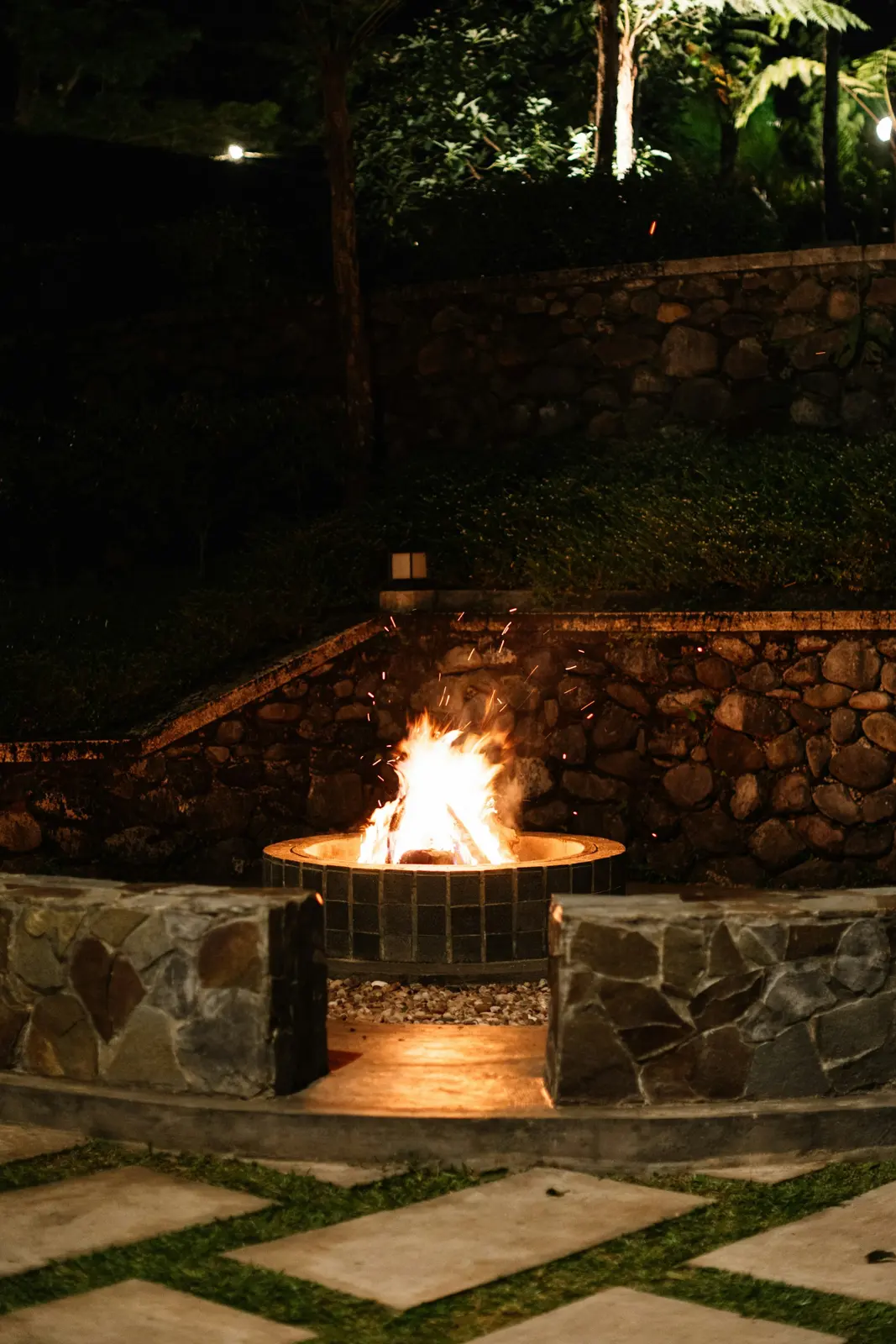 Can I use my fireplace on a No Burn Day in Maricopa County?What a Maricopa County No Burn Day means for your fireplace, wood stove, chiminea and fire pit, why gas is allowed, the fines, and how to check today's status.
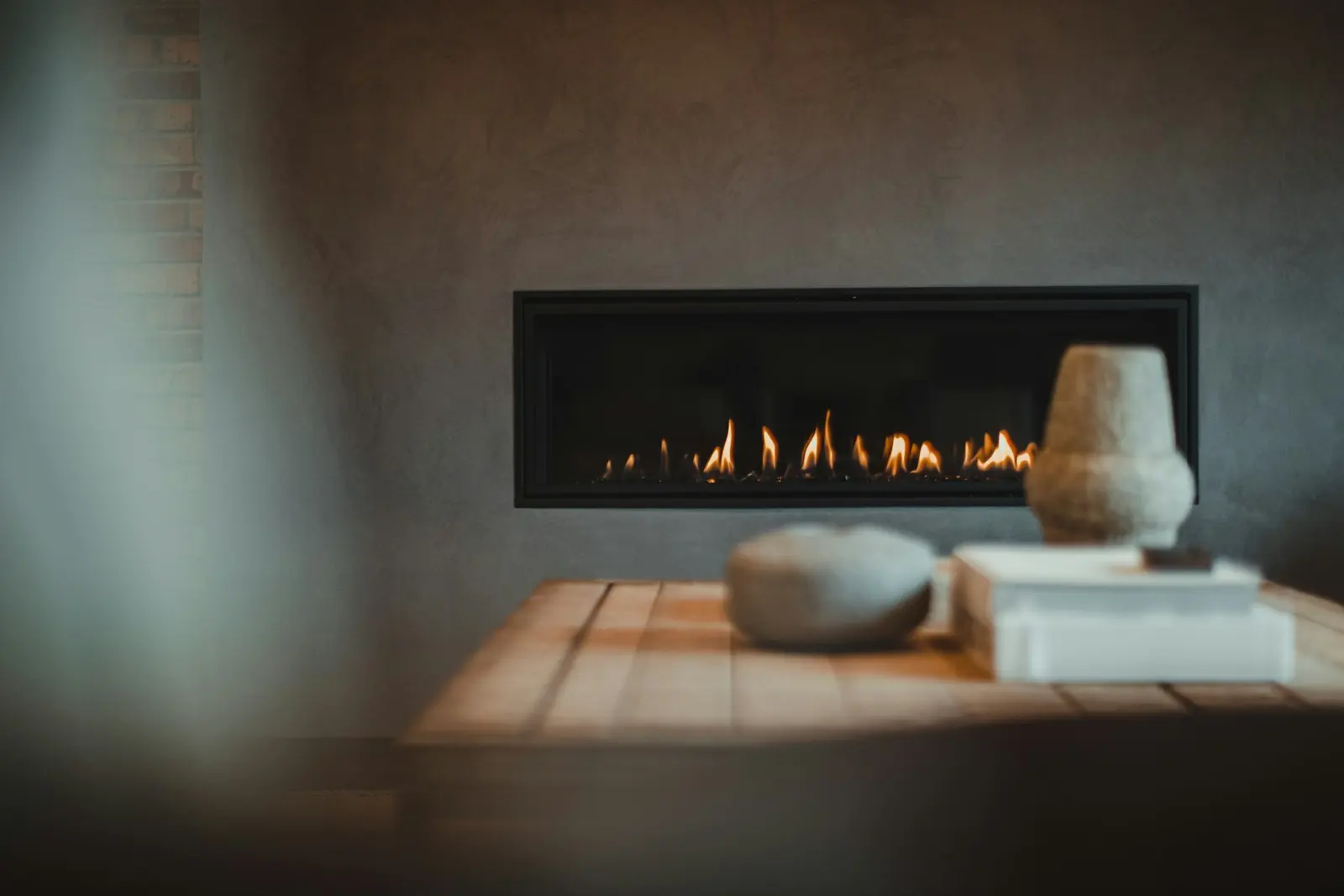 My gas fireplace pilot won't stay lit — why?Why a gas fireplace pilot lights then goes out, or stays on while the burner won't light — the usual parts, what you can check, and Scottsdale repair prices.
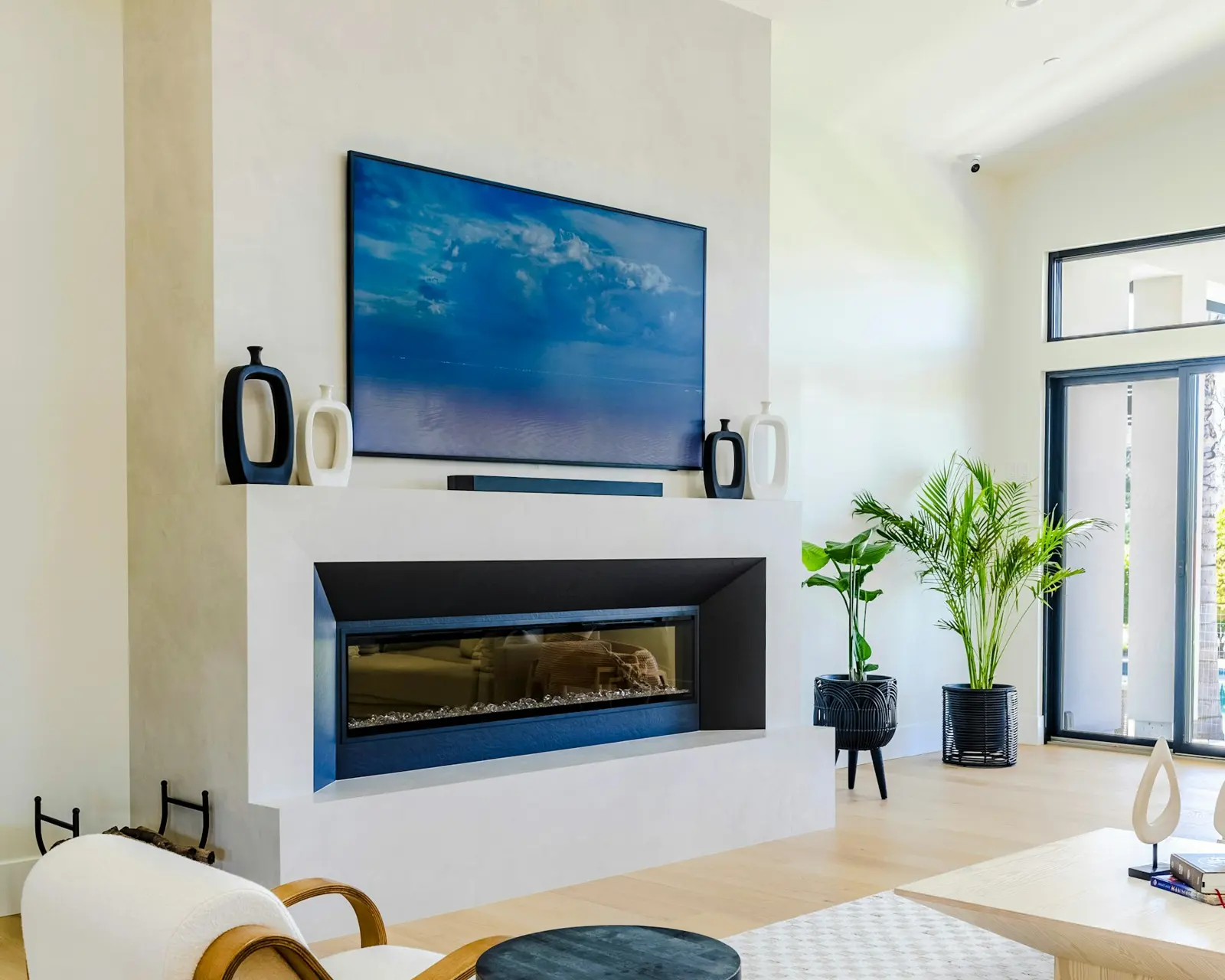 Do gas fireplaces need to be cleaned and serviced?Gas fireplaces burn clean but still need a yearly check. What a gas fireplace service includes, why Valley dust matters, and what it costs in Scottsdale.

Book online
Pick a day. We bring the answers.
Free inspection in a 3-hour window: 8 to 11, 11 to 2, or 2 to 5. We call to confirm before we arrive.